Supreme Court mandates humane conditions and reforms in Delhi Beggars’ Homes.
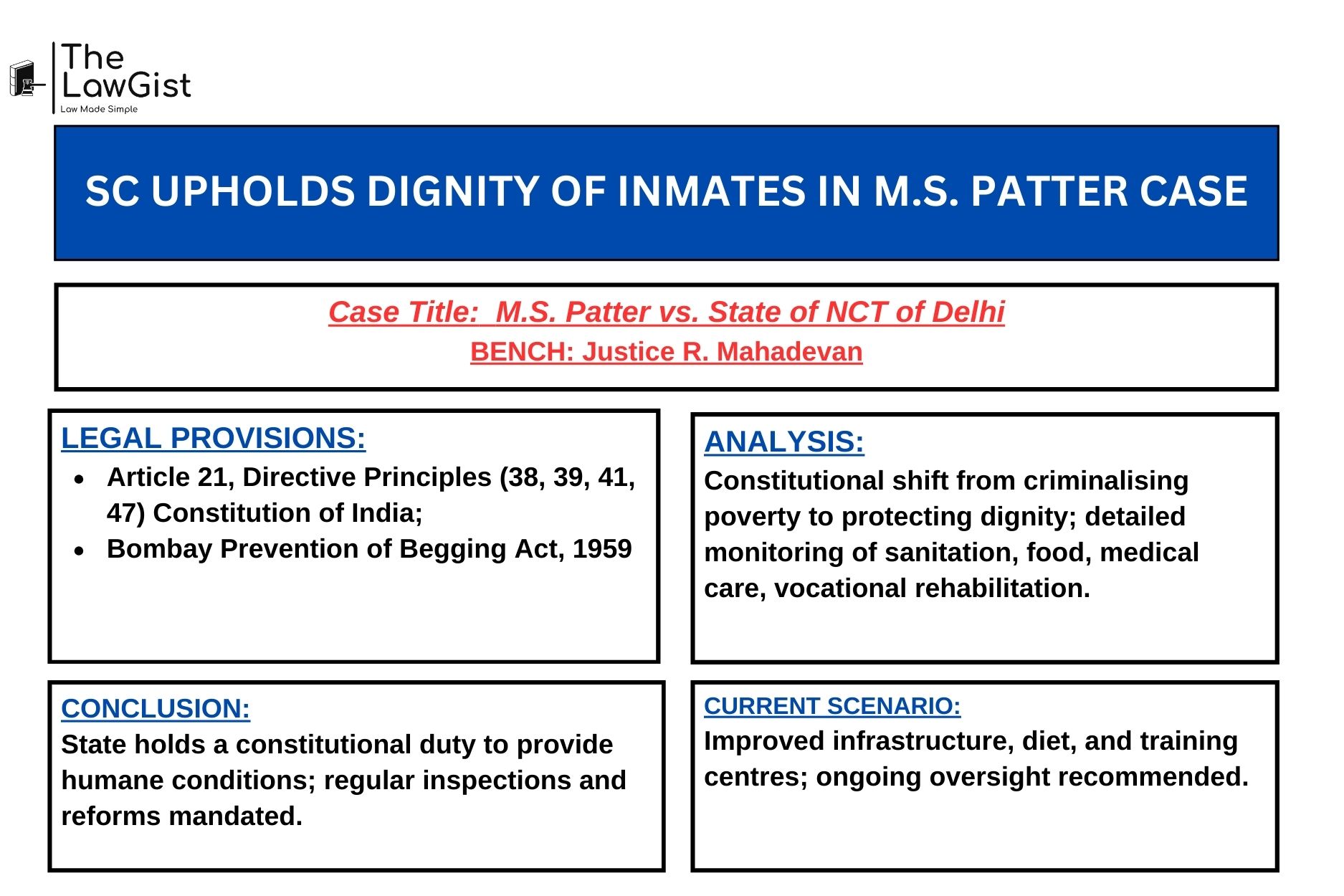
SC UPHOLDS DIGNITY OF INMATES IN M.S. PATTER CASE
CASE SUMMARY – The Supreme Court in M.S. Patter v. State of NCT of Delhi addressed the 2000 cholera outbreak at Delhi’s Lampur Beggars’ Home, which killed several inmates due to contaminated water. Challenging inadequate High Court follow-up, the Court examined colonial anti-begging laws, affirmed Article 21’s guarantee of dignity, and declared beggars’ homes constitutional trusts, not penal institutions. Over two decades it issued detailed orders on sanitation, food, medical care, staffing, and vocational training. By 2025, significant improvements were confirmed, reinforcing that the State must treat the destitute with compassion, ensuring humane living conditions and continuous monitoring.
| ASPECTS | DETAILS |
| Case Title | M.S. Patter vs. State of NCT of Delhi & Others |
| Introduction | Supreme Court appeal challenging Delhi High Court’s disposal of a PIL regarding deaths and poor conditions at the Lampur Beggars’ Home, Delhi. |
| Factual Background | In May 2000, a cholera/gastroenteritis outbreak in Lampur Beggars’ Home caused several inmate deaths due to contaminated water. A PIL sought accountability, compensation, and reforms. |
| Legal Issues |
|
| Applicable Law |
|
| Analysis | Court traced colonial vagrancy laws, stressed shift from punitive to welfare-based approach, held beggars’ homes are constitutional trusts. It monitored decades-long compliance, directed infrastructural, dietary, and medical reforms. |
| Conclusion | Supreme Court affirmed ongoing supervision, reinforced that residents of beggars’ homes deserve dignity and humane living; mandated continuous inspections, staffing, food quality, and vocational training improvements. |
| Current Scenario | Latest 2025 inspections found facilities clean, improved diet, vocational training running, though vigilance required for staffing, security, and regular monitoring. |
“A beggars’ home is a constitutional trust, not a discretionary charity, demanding dignity and humane care.”
SOURCE – SUPREME COURT OF INDIA
READ ALSO – Constitution of India
Discover powerful Latin Maxims and Legal Glossary and simplify complex legal terms in seconds.The LawGist ensures exam success with quality Blogs and Articles — Top Legal Picks (TLP), Current Affairs, Recent Supreme Court Judgments, and Step into the world of justice with Courtroom Chronicles. Backed by trusted resources and videos, The LawGist is every Professionals and Aspirant’s first choice. Discover more at thelawgist.org.