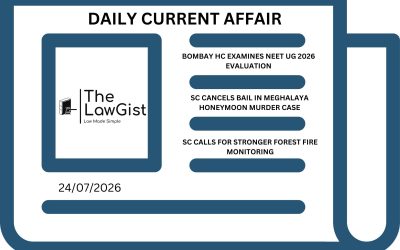
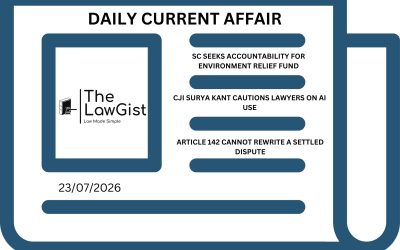
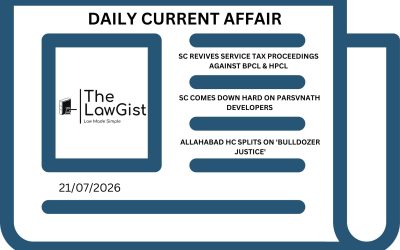
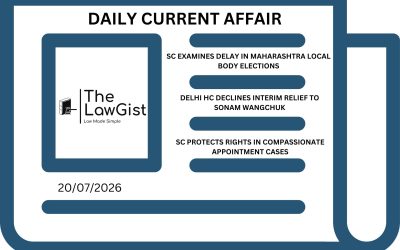
From law graduates needing experience to the Waqf Act challenge and bail for delay—SC reinforces the importance of experience, fairness, and constitutional rights.
DAILY CURRENT AFFAIRS (20 MAY 2025)
MINIMUM 3-YEAR PRACTICE MUST FOR JUDICIAL SERVICE EXAMS
Case Name: All India Judges Association vs Union of India (Minimum Practice & LDCE issue) WP( c ) 1022 of 2019
The Supreme Court has reaffirmed that fresh law graduates cannot directly appear for judicial service examinations. Candidates must possess at least three years of active legal practice. The ruling emphasizes experiential maturity as essential for handling judicial responsibilities effectively.
Legal Provision & Framework:
- Article 233 of the Constitution
- Judicial Services Rules (varies state-wise)
- Past precedent: Deepak Aggarwal v. Keshav Kaushik (2013)
Source: Supreme Court of India
SC HEARS CHALLENGES TO WAQF (AMENDMENT) ACT, 2025
Case Name: Waqf Development Council v. Union of India & Ors.
Petitions challenging the constitutionality of the Waqf (Amendment) Act, 2025, were heard by the Supreme Court. The petitioners argue the Act violates property and equality rights. The Court reserved interim relief, stating strong prima facie grounds are needed to intervene at this stage.
Legal Provision & Framework:
- Article 14, 25, 26, and 300A of the Constitution
- Waqf Act, 1995 (as amended in 2025)
Source: Supreme Court of India
BAIL GRANTED FOR DELAY IN CHARGESHEET FILING
Case Name: Arun Kumar v. State of Uttar Pradesh
The Supreme Court granted bail to an accused jailed for over seven months without a chargesheet being filed. Calling the delay “unfortunate,” the Court stressed that prolonged detention without trial undermines personal liberty and due process.
Legal Provision & Framework:
- Section 167(2) CrPC
- Article 21 of the Constitution (Right to Personal Liberty)
Source: Supreme Court of India
Also Read: DAILY CURRENT AFFAIRS (19 MAY 2025)