Supreme Court stresses ethical lawyering, hears controversy over Sanatana Dharma remarks, and protects accident victims’ compensation rights.
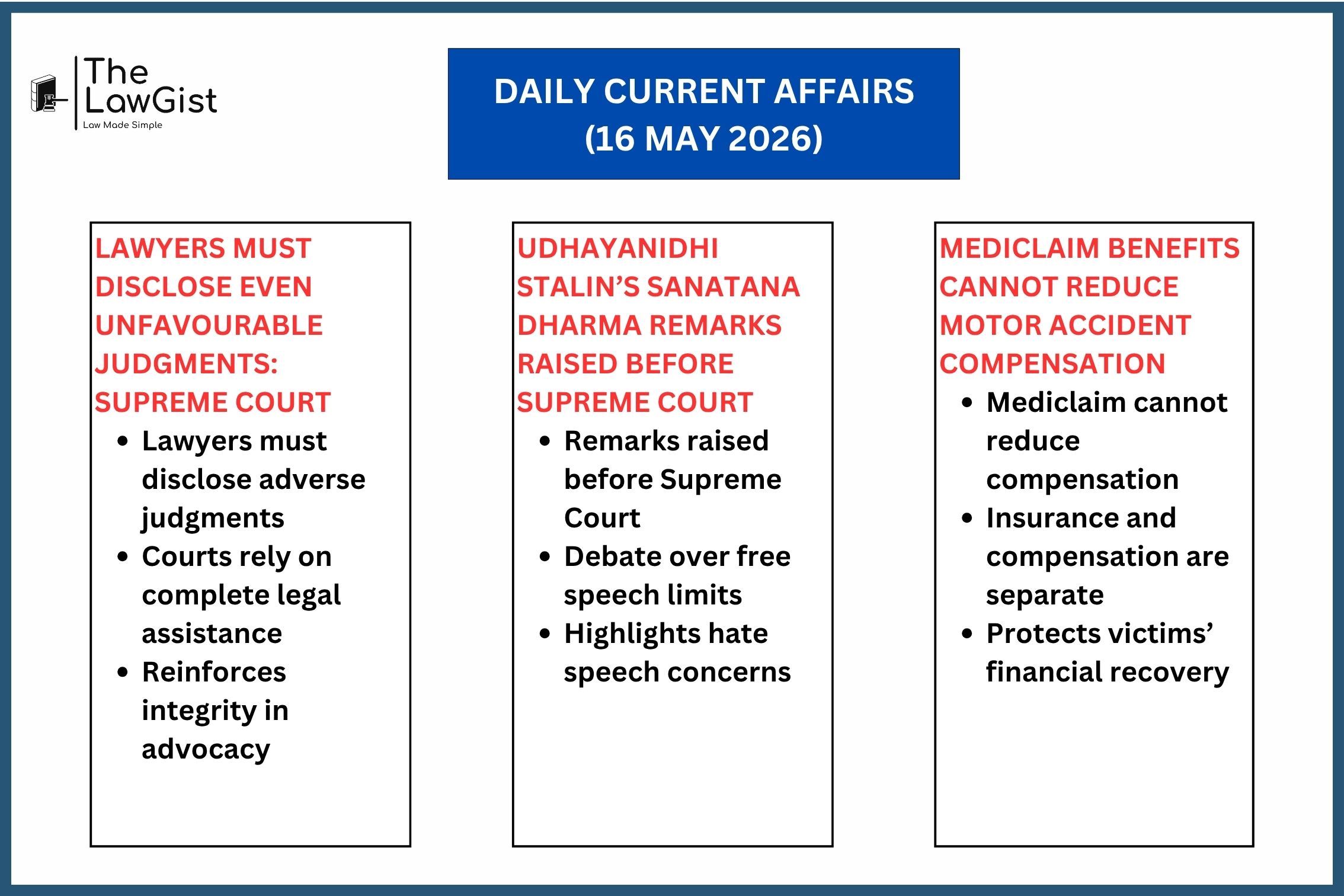
DAILY CURRENT AFFAIRS (16 MAY 2026)
LAWYERS MUST DISCLOSE EVEN UNFAVOURABLE JUDGMENTS: SUPREME COURT
Case Name: New India Assurance Company v Dolly Satish Gandhi and another
The Supreme Court of India observed that lawyers are duty-bound to place before courts even those judgments that do not support their client’s case. Stressing ethical advocacy, the Court noted that selective citation undermines justice delivery and that advocates serve not merely clients, but also the larger administration of justice.
Legal Provisions & Framework:
- Advocates Act, 1961
- Bar Council of India Rules
- Duty of Candour to Court
- Ethical Advocacy Principles
- Administration of Justice Doctrine
Source: Supreme Court of India
UDHAYANIDHI STALIN’S SANATANA DHARMA REMARKS RAISED BEFORE SUPREME COURT
Case Name: Amita Sachdeva v Udhayanidhi Stalin | Contempt Petition (c) 1235/2023
A lawyer brought to the Supreme Court’s notice remarks allegedly made by Udhayanidhi Stalin against Sanatana Dharma in the Tamil Nadu Assembly. The development adds to ongoing legal and political debates around hate speech, freedom of expression, and constitutional limits governing public discourse by elected representatives.
Legal Provisions & Framework:
- Article 19(1)(a) – Freedom of Speech
- Article 19(2) – Reasonable Restrictions
- Hate Speech Jurisprudence
- Constitutional Morality Principles
- Public Accountability of Representatives
Source: Supreme Court of India
MEDICLAIM BENEFITS CANNOT REDUCE MOTOR ACCIDENT COMPENSATION
Case Name: New India Assurance Company v Dolly Satish Gandhi and another
The Supreme Court of India ruled that reimbursement received through mediclaim insurance cannot be deducted from compensation awarded in motor accident claims. The Court clarified that insurance benefits arise from a separate contractual arrangement and cannot diminish statutory compensation meant to restore victims after accidents.
Legal Provisions & Framework:
- Motor Vehicles Act, 1988
- Compensation Jurisprudence
- Principle of Restitutio in Integrum
- Insurance Contract Law
- Victim Welfare Framework
Source: Supreme Court of India
READ ALSO – DAILY CURRENT AFFAIRS (13 MAY 2026)