ANI’s copyright takedowns spark outrage among YouTubers and digital rights activists.
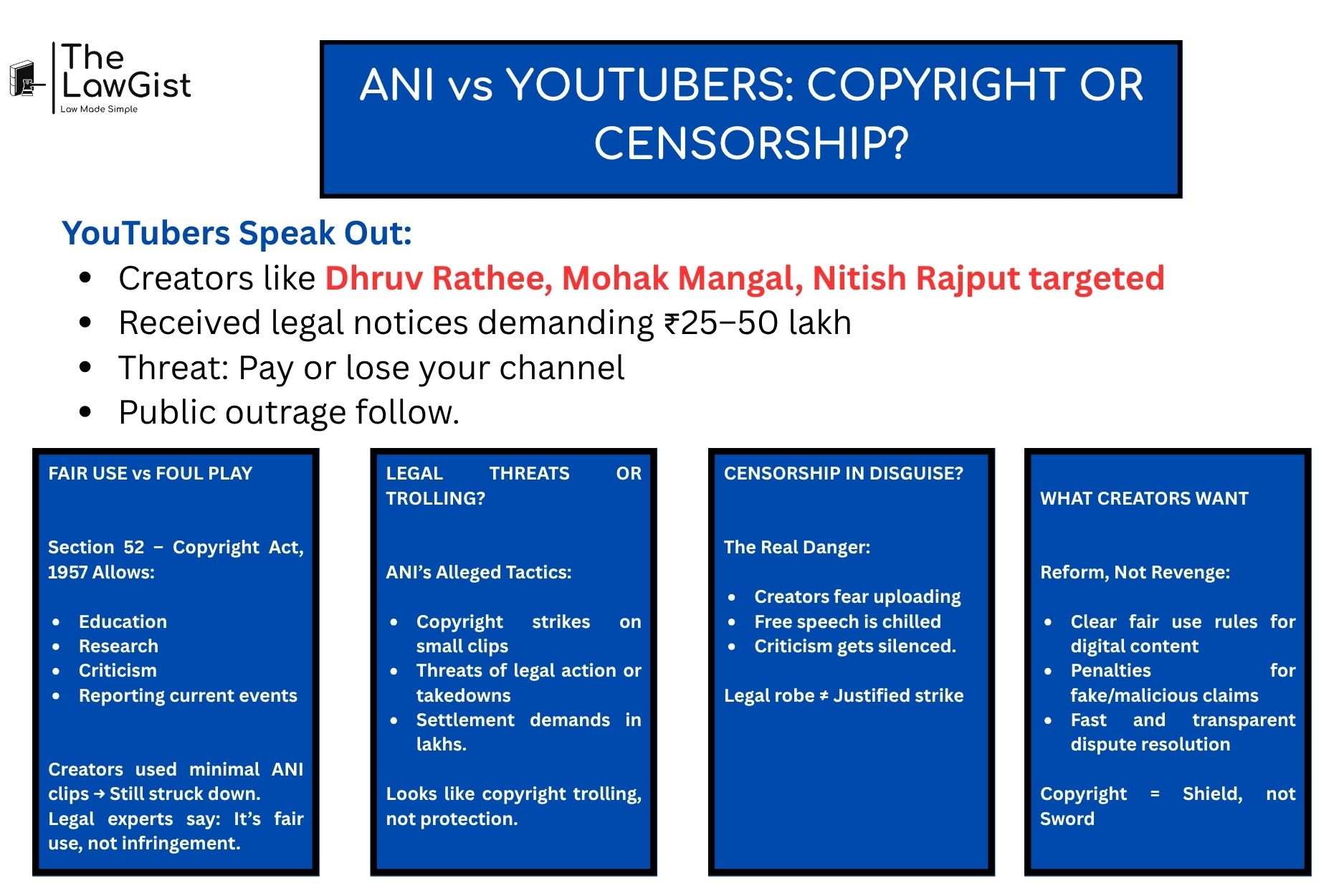
ISSUE IN NEWSANI vs Youtubers: Copyright or Censorship? India’s digital freedom is under fire — and this time, the threat may be coming not from censorship laws or platform bans, but from the misuse of copyright enforcement itself. Prominent YouTubers such as Dhruv Rathee, Mohak Mangal, and Nitish Rajput have publicly accused news agency ANI of using copyright strikes as tools of intimidation rather than intellectual property protection. |
Is This Copyright Enforcement — or Extortion?
Creators have disclosed receiving legal notices demanding ₹25–50 lakh per video, with the threat of permanent channel deletion looming. Notably, these takedown threats did not originate from YouTube, but from ANI’s legal partner, further raising concerns of abuse.
“This isn’t copyright enforcement. It’s ransom.”
— Mohak Mangal
Fair Use vs. Foul Play
Under Section 52 of the Copyright Act, 1957, creators in India are legally allowed to use copyrighted content without permission for purposes such as:
- Education
- Research
- Criticism
- Reporting current events
Despite this, ANI reportedly labeled even minimal and transformative use of their footage as “infringement.” Legal experts and the wider creator community argue such usage falls squarely under fair use (fair dealing) — making ANI’s actions questionable.
Legal Threats or Copyright Trolling?
The tactics being alleged sound alarmingly similar to copyright trolling, a practice where copyright law is weaponized for profit or suppression, rather than protection.
Alleged ANI Tactics
These aggressive maneuvers have sparked public outrage and brought conversations around free expression and platform abuse to the forefront.
- Strikes against videos using brief clips of ANI content
- Threats of lawsuits or account deletion
- Demands for hefty monetary settlements in exchange for peace
Censorship Wrapped in Legal Robes?
The larger concern isn’t just the financial burden on creators — it’s the chilling effect such legal threats create. When criticism is met with legal silencing, creators begin to self-censor, robbing the public of diverse and dissenting voices.This is no longer a matter confined to YouTubers — it touches the core of India’s digital expression and democratic discourse.
Who’s Policing the Enforcers?
The current YouTube copyright system operates in a way that often favors large media houses:
- Content ID auto-flags content
- Entities like ANI can file mass complaints
- Small and independent creators are left without the legal muscle to challenge claims
India lacks a robust mechanism to address or mediate these disputes, leaving creators vulnerable to intimidation or deletion.
CONCLUSION – What Do Creators Want?
This controversy isn’t just a call-out — it’s a call to action. Creators are demanding:
- Clear, enforceable rules for digital fair use
- Penalties for false or malicious copyright claims
- A transparent and timely dispute resolution system
Because copyright law should be a shield to protect creativity, not a sword to silence it.
“When copyright becomes a tool to threaten, not protect, it stops being law—and starts being leverage.”
Sources:
WRITTEN BY – SHRAVANI SRINIVAS