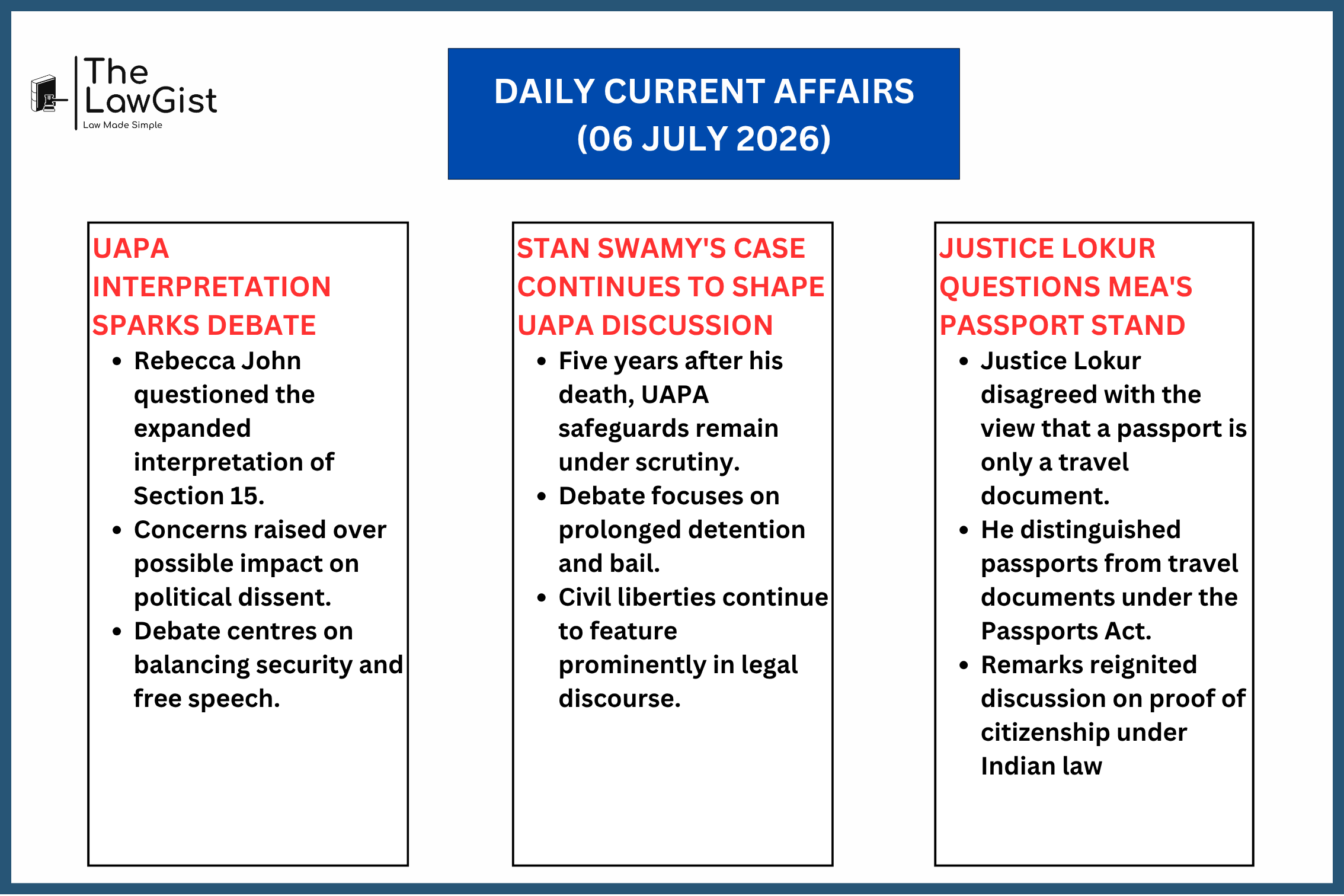
Key legal developments on UAPA interpretation, continuing debate over Stan Swamy’s legacy, and Justice Lokur’s remarks on passports and citizenship.
DAILY CURRENT AFFAIRS (06 JULY 2026)
REBECCA JOHN WARNS SC’S EXPANDED UAPA INTERPRETATION COULD IMPACT POLITICAL DISSENT
Case Name: Observations following the Supreme Court’s ruling in the Gulfisha Fatima Delhi Riots Conspiracy Case
Senior Advocate Rebecca John expressed concern over the Supreme Court’s recent interpretation of Section 15 of the Unlawful Activities (Prevention) Act (UAPA), stating that expanding the definition of a “terrorist act” to potentially include certain speech-related conduct may have wider implications for political dissent. She cautioned that the judgment could influence future prosecutions involving free expression and public protest.
LEGAL PROVISIONS & FRAMEWORK
- Unlawful Activities (Prevention) Act, 1967
- Section 15 – Definition of terrorist act
- Article 19(1)(a) – Freedom of speech and expression
- Article 19(2) – Reasonable restrictions
- National security jurisprudence
- Constitutional balance between liberty and security
Source: Supreme Court of India
FIVE YEARS AFTER STAN SWAMY’S DEATH, CONCERNS OVER UAPA’S APPLICATION CONTINUE
Case Name: Bhima Koregaon–Elgar Parishad Case
Marking five years since the death of Jesuit priest and tribal rights activist Father Stan Swamy in judicial custody, legal commentators and rights advocates have renewed concerns regarding the application of the UAPA, particularly in prolonged pre-trial detention cases. The discussion revisits issues surrounding bail, procedural safeguards, and the balance between national security and individual liberty.
LEGAL PROVISIONS & FRAMEWORK
- Unlawful Activities (Prevention) Act, 1967
- Article 21 – Right to life and personal liberty
- Bail jurisprudence under UAPA
- Constitutional due process principles
- Protection of civil liberties
- Criminal justice and pre-trial detention
Source: Supreme Court Proceedings / Legal Commentary
JUSTICE LOKUR CRITICISES MEA’S STAND THAT PASSPORT IS ONLY A TRAVEL DOCUMENT
Case Name: Public remarks by Justice Madan B. Lokur on citizenship and passport law
Former Supreme Court Judge Justice Madan B. Lokur criticised the Ministry of External Affairs’ statement that a passport is merely a travel document and not proof of citizenship. He argued that the Passports Act distinguishes between a “passport” and a “travel document,” and maintained that an Indian passport signifies Indian citizenship under the statutory framework.
LEGAL PROVISIONS & FRAMEWORK
- Passports Act, 1967
- Citizenship Act, 1955
- Article 14 – Equality before law
- Administrative law principles
- Statutory interpretation
- Constitutional rights relating to citizenship
Source: Supreme Court of India
Also Read: DAILY CURRENT AFFAIRS (23 JUNE 2026)