Indian courts address defamation claims, Waqf property ownership disputes, and delayed CBSE results impacting Gulf-based students.
DAILY CURRENT AFFAIRS (8th JUNE 2026)
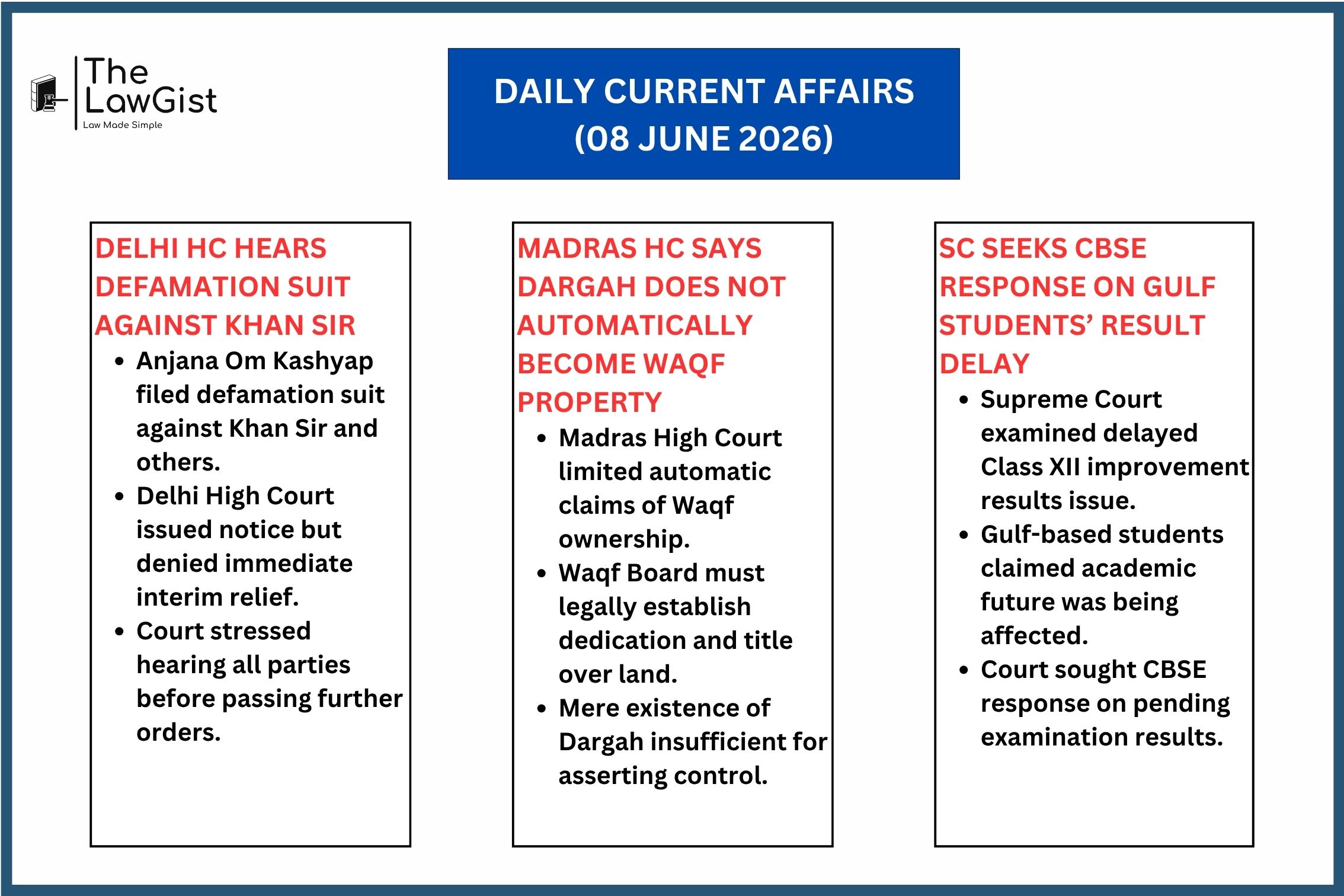
DELHI HIGH COURT TO HEAR ANJANA OM KASHYAP’S DEFAMATION SUIT AGAINST KHAN SIR
Case Name: Anjana Om Kashyap & TV Today Network v. Faisal Khan alias Khan Sir & Ors.
The Delhi High Court considered a defamation suit filed by journalist Anjana Om Kashyap and TV Today Network against educator Khan Sir and others over alleged defamatory remarks made during the ongoing “star teachers” controversy. The Court issued notice but declined immediate interim relief, stating that all parties must first be heard before passing further orders.
LEGAL PROVISIONS & FRAMEWORK
- Law of defamation in civil jurisprudence
- Article 19(1)(a) – Freedom of speech and expression
- Article 21 – Right to reputation
- Injunction principles in civil suits
- Media and digital content liability
- Balancing free speech with reputational rights
Source: Delhi High Court
EVERY DARGAH DOES NOT AUTOMATICALLY BECOME WAQF PROPERTY: MADRAS HC
Case Name: Tamil Nadu Waqf Board v. Private Landowners
The Madras High Court ruled that the mere existence of a Dargah or grave structure on land does not automatically convert the property into Waqf land. The Court held that the Waqf Board must establish legal ownership and valid dedication before assuming control or exercising authority over such properties.
LEGAL PROVISIONS & FRAMEWORK
- Waqf Act, 1995
- Property ownership and title principles
- Religious endowment jurisprudence
- Survey and notification requirements under Waqf law
- Principles of natural justice
- Judicial review of Waqf Board powers
Source: Madras High Court
SC SEEKS CBSE RESPONSE ON GULF STUDENTS’ PLEA OVER CLASS XII RESULT
Case Name: Overseas Students v. CBSE
The Supreme Court sought a response from CBSE on a plea filed by Gulf-based students seeking declaration of their Class XII improvement examination results. The Court observed that the issue directly affects students’ academic futures and emphasised that procedural delays should not jeopardise educational opportunities and admissions.
LEGAL PROVISIONS & FRAMEWORK
- Article 21A – Right to education
- Principles of natural justice
- CBSE examination regulations
- Educational fairness doctrine
- Administrative law principles
- Student rights jurisprudence
Source: Supreme Court of India
Also Read: DAILY CURRENT AFFAIRS (6th JUNE 2026)