
TORT
Recent Posts

JURISDICTION OF CIVIL COURTS (SECTION 9)
Introduction: In the vast realm of civil litigation, Section 9 of the Civil Procedure Code (CPC) holds significant importance. This section deals with the jurisdiction of civil courts in India. Concept of Jurisdiction: Jurisdiction refers to the authority of a...

DIFFERENCES BETWEEN DECREE, ORDER AND JUDGMENT
Decree : Decree is a final and conclusive adjudication that determines the rights and liabilities of the parties involved in a suit. It can be passed in both original and appellate jurisdictions. It can be executed as it is or enforced through legal means....

JURISDICTION OF CIVIL COURTS (SECTION 9)
Introduction: In the vast realm of civil litigation, Section 9 of the Civil Procedure Code (CPC) holds significant importance. This section deals with the jurisdiction of civil courts in India. Concept of Jurisdiction: Jurisdiction refers to the authority of a...

STAY OF SUITS (SECTION 10)
Introduction: When it comes to legal proceedings, there may arise situations where multiple lawsuits are filed pertaining to the same subject matter. In such cases, it becomes crucial to ensure fairness and avoid conflicting judgments. This is where the concept of a...
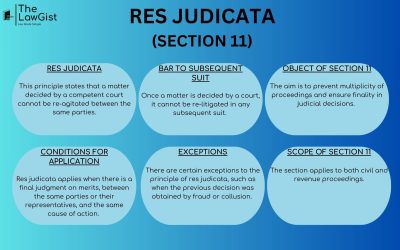
RES JUDICATA (SECTION 11)
Introduction: In the vast realm of civil litigation, there are various legal provisions that play a crucial role in shaping the outcome of a case. One such provision is Section 11 of the Civil Procedure Code, which deals with the doctrine of res judicata. In this...
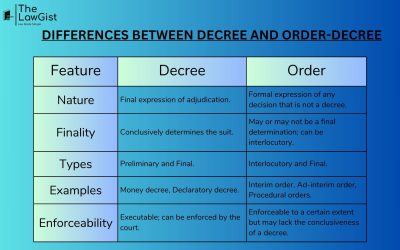
Differences Between Decrees and Orders
The Civil Procedure Code is a fundamental legislation that governs the procedural aspects of civil cases in many jurisdictions. Within this legal framework, two essential terms often arise: decrees and orders. While they may seem similar, understanding their...