Indian Air Force jets en route to strike terrorist infrastructure during Operation Sindoor in response to the 2025 Pahalgam attack.
TERRORISM AND THE INDIA-PAKISTAN CONFLICT: A LEGAL AND STRATEGIC ANALYSIS
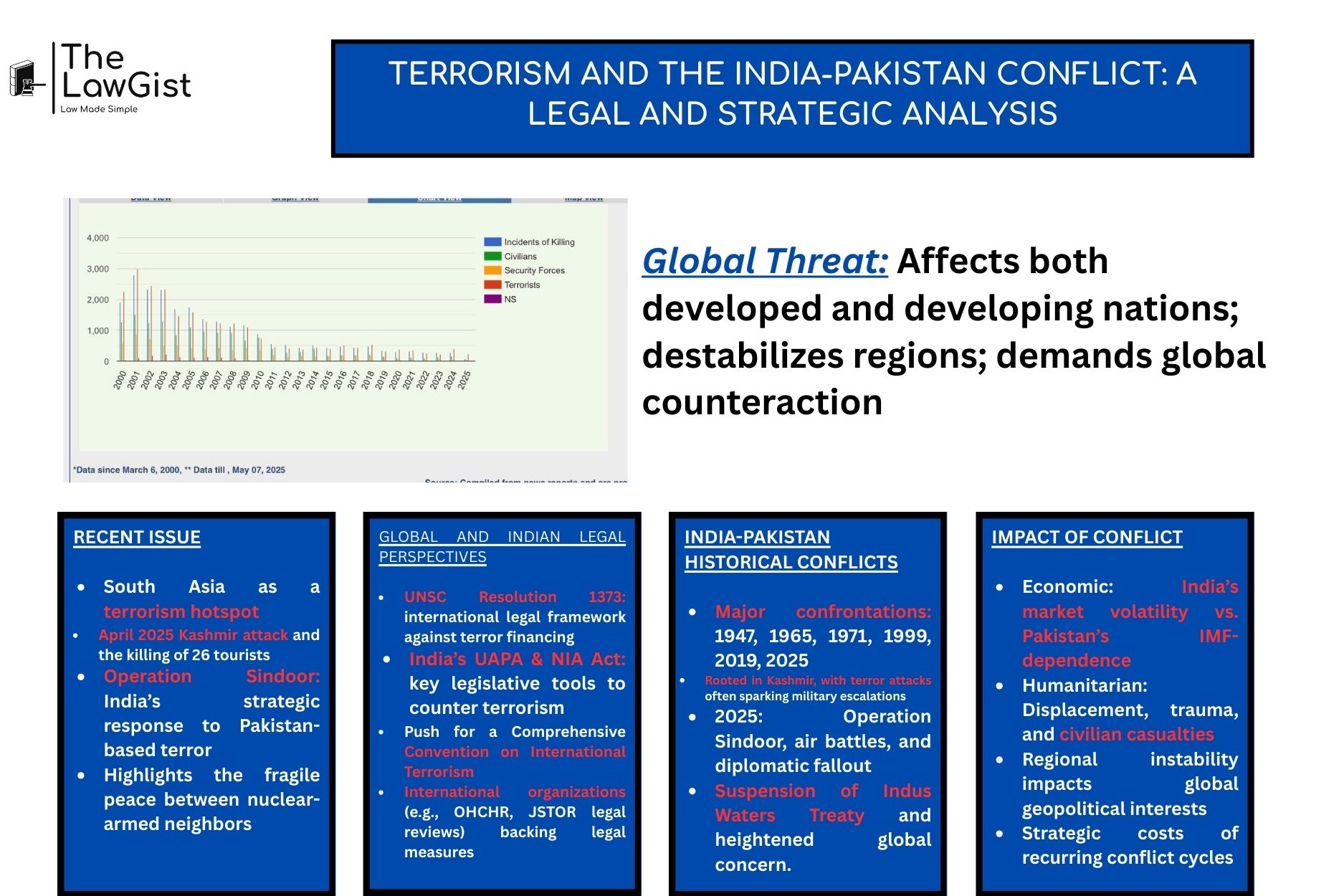
One of the biggest threats to international security is terrorism, especially in India and Pakistan, recently which is the battlefield of ongoing hostilities. Multiple wars, cross-border militancy, and a complicated legal and diplomatic landscape have all impacted the region’s history. The recent escalation in April 2025, which followed the terrible deaths of 26 tourists in Pahalgam Kashmir, highlights the ongoing threat of terrorism and the unstable state of peace in the country.
Global and Indian Perspectives on Terrorism
The United Nations Security Council’s Resolution 1373 highlights the necessity of international collaboration in the fight against terrorism in all of its manifestations, and terrorism is unanimously condemned worldwide. India has been an outspoken supporter of a comprehensive international treaty on terrorism due to the many terrorist strikes it has experienced over the years. To combat and stop terrorist activities, India has passed strict national legislation such as the Unlawful Activities (Prevention) Act (UAPA). The below given chart shows the South Asia Terrorism Portal data on terrorist activity that occurred in India .
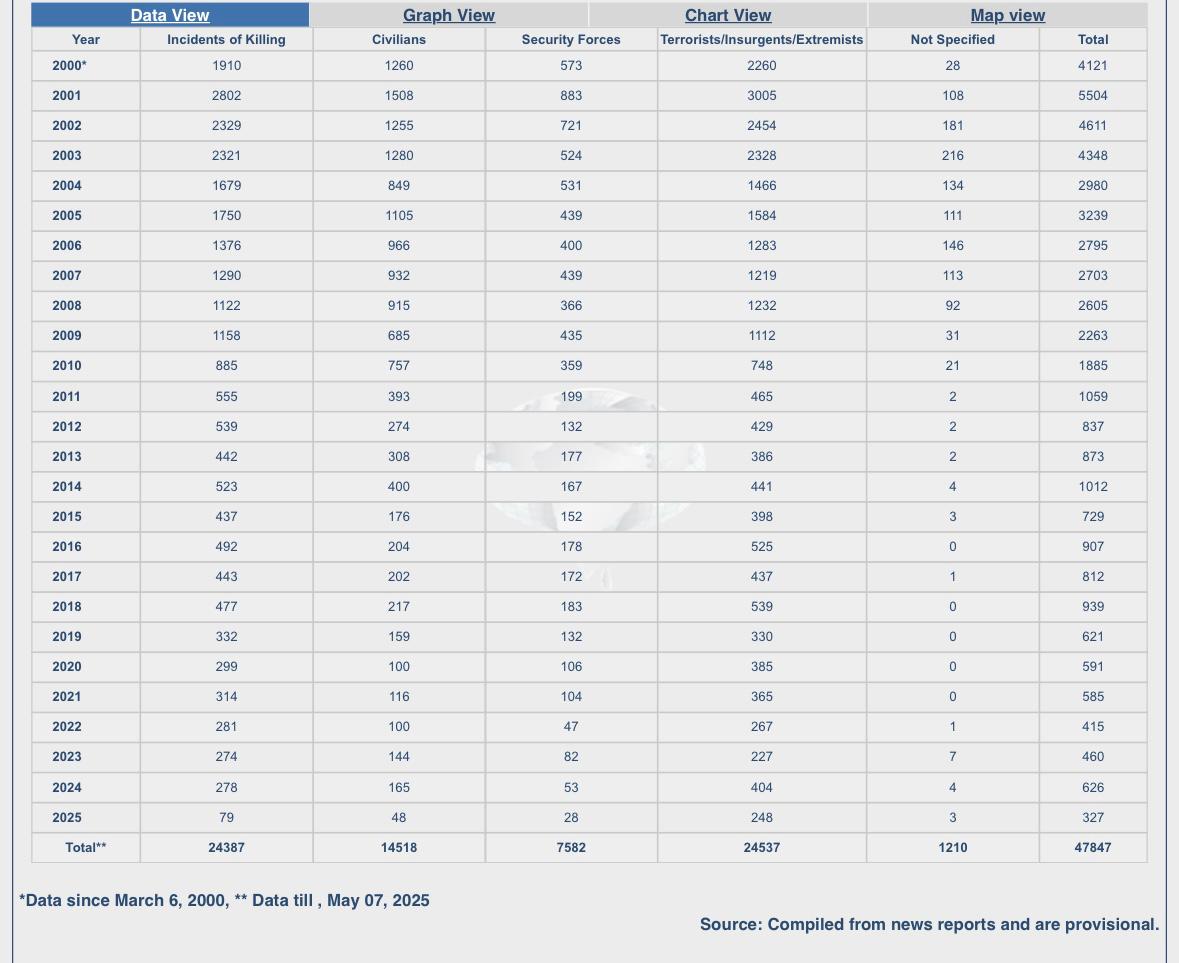
South Asia Terrorism Portal data on terrorist activity.
TERRORISM AND THE INDIA-PAKISTAN CONFLICT: A LEGAL AND STRATEGIC ANALYSIS
Historical Overview of India-Pakistan Conflicts
After 1947 partition, India and Pakistan have engaged in several wars and military confrontations:
- 1947-48: The first war over Kashmir erupted when Pakistani tribal forces invaded the region, leading to its accession to India and the establishment of the Line of Control.
- 1965: A second war over Kashmir resulted in significant casualties on both sides but ended in a stalemate, with borders remaining unchanged .
- 1971: Triggered by the Bangladesh Liberation Movement, this conflict led to the creation of Bangladesh and marked a significant geopolitical shift in South Asia.
- 1999: The Kargil conflict saw Pakistani soldiers and militants infiltrate Indian positions in Kashmir, leading to a limited war that concluded with India’s military success.
- 2019: Following a suicide bombing in Pulwama, India conducted airstrikes in Balakot, Pakistan, targeting terrorist training camps, leading to heightened tensions.
- 2025: The recent escalation began with a terrorist attack in Pahalgam, Kashmir, leading to reciprocal airstrikes and artillery exchanges between the two nations.
The 2025 India-Pakistan conflict, ignited by the tragic Pahalgam attack that claimed 26 lives, rapidly escalated into a multifaceted confrontation. India’s swift response as “Operation Sindoor,” involved precision strikes on 9 locations in Pakistan, targeting alleged terrorist infrastructures in areas like Bahawalpur and Muridke. This operation reportedly eliminated key figures, including Abdul Rauf Azhar of Jaish-e-Mohammed, linked to past high-profile terrorist attacks .The ongoing situation is one of the biggest confrontations since World War II occurred as the situation worsened with a huge aerial battle. Both countries exchanged drones and missiles, which resulted in serious injuries and destruction of infrastructure. Pakistan warned of dire consequences after India’s historic suspension of the Indus Waters Treaty further strained relations. International players, such as the US and the UN, have called for cautiousness, highlighting the grave repercussions of further escalation between these neighbors who possess nuclear weapons.
Legal Perspectives on Terrorism
International Legal Framework:
The worldwide community has set up a legal framework to fight terrorism through a number of United Nations resolutions. Member states are required by Resolution 1373 to stop and prevent the funding of terrorist activities and to make it illegal to give money to terrorists.
India’s Legal Measures:
India has implemented several laws to address terrorism, including:
- Unlawful Activities (Prevention) Act (UAPA): UAPA act provides for the effective prevention of unlawful activities and associations in India.
- National Investigation Agency (NIA) Act: NIA is the central agency to investigate and prosecute offenses affecting the sovereignty, security, and integrity of India.
Both the laws aim to strengthen India’s legal framework to combat terrorism effectively.
Impact of Wars on India and Pakistan
Economic Consequences:
Wars and continuous ongoing conflicts have crucial economic repercussions:
- India:Conflicts can discourage foreign investment and result in higher defense spending, even if India’s economy has proven resilient. For example, India’s GDP grew steadily during the Kargil War in 1999, while the present tensions have caused market instability.
- Pakistan: Pakistan’s economy, which has economic issues such as rising inflation and dependency on IMF bailouts, is particularly exposed to the strains of prolonged conflict.
Geographical Vulnerabilities:
| Aspect | Description | Impact |
| Porous Borders & Mountainous Terrain | LoC passes through rugged mountains, forests, and snow-covered areas. Surveillance and patrols are difficult, especially in harsh weather. | Facilitates infiltration by terrorist groups, complicates military monitoring and response. |
| Strategic Locations Under Stress | Regions like Poonch, Uri, and Kupwara regularly face infiltration, sniper fire, and cross-border shelling due to proximity to Pakistan-administered areas. | Increases tension and military deployments; frequent flashpoints of conflict. |
| Civilian Settlements in High-Risk Zones | Villages are located close to the LoC and are vulnerable to artillery fire, militant attacks, and displacement. | High civilian casualties and psychological trauma; disrupts education, livelihoods, and social stability. |
| Weather and Terrain Challenges | Snowfall in winter and landslides during monsoon make certain areas inaccessible, limiting troop mobility. | Hinders year-round defense infrastructure and rapid response capability. |
| Insufficient Border Infrastructure | Lack of consistent fencing, outdated surveillance tech, and insufficient lighting in certain stretches along the LoC. | Reduces effectiveness of border control, increasing the probability of undetected movement and terrorist entry. |
Social and Humanitarian Impact:
These disputes make humanitarian problems worse by causing psychological distress, displacement, and fatalities. Daily life in border areas has been disturbed and civilian casualties have been caused by the recent escalations.
Analysis
The repeated nature of India-Pakistan disputes, which are frequently brought on by terrorist attacks, stresses the need of a comprehensive strategy:
- Diplomatic Engagement: Sustained dialogue is essential to address underlying issues and build trust.
- Counter-Terrorism Cooperation: Both nations must collaborate to dismantle terrorist networks and prevent cross-border terrorism.
- International Mediation: Global powers and organizations can play a role in facilitating negotiations and ensuring compliance with international norms.
Conclusion
Terrorism remains a serious threat for peace in the region. Due to past grievances and ongoing tensions, the India-Pakistan dynamic necessitates a comprehensive approach that includes international collaboration, diplomatic initiatives, and legal measures. The only way to end the ongoing conflict and guarantee security and prosperity for both countries is through continuous engagement and a shared commitment to peace.
“Terrorism anywhere is a threat to peace everywhere—India and Pakistan must confront it not as rivals, but as responsible neighbors.”
SOURCE –