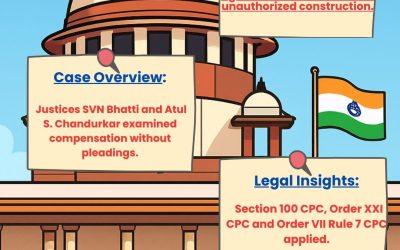
Supreme Court rejects state’s appeal, stating that matching blood-stained weapon is insufficient for murder conviction under Section 302 IPC.
Case in NewsSupreme Court on blood stained weapon evidence, says it alone can’t convict for murder. |
Case Overview
Case Name – State of Rajasthan v. Hanuman – Criminal Appeal No. 631 of 2017
In State of Rajasthan v. Hanuman the Supreme Court led by Justice Sandeep Mehta and Justice Prasanna B. Varale, upheld a 2015 Rajasthan High Court judgment acquitting the accused . The trial court had earlier convicted the respondent for the murder of Chotu Lal in 2008 based on circumstantial evidence and recovery of a blood-stained weapon . The apex court dismissed the State’s appeal reiterating that matching blood group on the weapon is insufficient to convict for murder .
Key Aspects
The key aspects of the case are as under –
- Chotu Lal was murdered on March 1-2, 2007. FIR was against unknown persons .
- The accused was later charged based on suspicion and recovery of weapon .
- Prosecution relied on motive (jealousy towards deceased’s wife) and FSL blood report .
- High Court acquitted due to lack of a complete chain of evidence .
Legal Insights
The legal aspects of the case are as under-
- Section 302, Indian Penal Code, 1860 – Punishment for murder .
- Raja Naykar vs. State of Chhattisgarh (2024) 3 SCC 481 – Held that blood-stained weapon matching victim’s blood group is insufficient for conviction .
- Supreme Court reiterated that interference in acquittal requires sole view of guilt beyond doubt .
- Weak motive and inconclusive circumstantial evidence were highlighted .
Court’s Verdict
The Supreme Court upheld the High Court’s acquittal stating that mere recovery of a blood-stained weapon is not enough for conviction . The bench led by Justice Sandeep Mehta and Justice Prasanna B. Varale found no conclusive evidence establishing guilt and reiterated the legal principle that appeal against acquittal warrants interference only when guilt is the only possible view .
Source – Supreme Court of India
Read also – Indian Penal Code