The Supreme Court clarifies that High Courts can interfere in S.482 CrPC petitions, even at a preliminary investigation stage, ensuring judicial oversight in criminal proceedings.
NO ABSOLUTE RULE THAT HC CANNOT INTERFERE IN S.482 CRPC PETITION BY SC
Can High Courts Intervene in S.482 CrPC Petitions During Preliminary Investigations?
The Supreme Court of India stated that there is no absolute rule stopping High Courts from interfering in a S.482 CrPC petition, even if an investigation is in its preliminary stage.
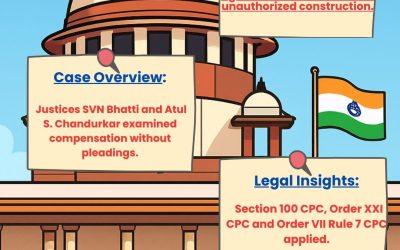
In the case of Kulandaisamy & Anr. vs. State Represented by Its Inspector of Police & Anr., it was held that there is no absolute rule that HC cannot interfere in S.482 CRPC petition by SC if the investigation is at a preliminary stage. Justice Abhay Oka and Justice Ujjal Bhuyan stated that the Madras High Court erred by not considering the plea on merits and ordered a fresh hearing.
Case in Point
The petitioners sought to quash an FIR alleging misappropriation of ₹4.3 crore from the Coimbatore Education Foundation. Despite acknowledging the dispute had civil elements, the Madras High Court rejected their S.482 CrPC petition, permitting the investigation to proceed.
Key Aspects
- The High Court rejected the petition by quoting an early-stage investigation.
- The Supreme Court of India ruled that S.482 CrPC gave the High Courts the power to quash frivolous FIRs.
- It stressed that the preliminary investigation stage does not bar HC interference .
Legal Insights
- S.482 CrPC permits High Courts to stop the misuse of legal proceedings.
- The Supreme Court explained that courts can quash FIRs even at an early investigation stage.
Ripple Effect
- Strengthens judicial discretion in controlling malicious prosecutions.
- Ensures fairness in cases where criminal proceedings are on civil disputes.
What Next?
The Madras High Court must now reconsider the petition on merits for fair application of S.482 CrPC.
Final Verdict
This ruling of the court establishes that High Courts can interfere in S.482 CrPC petitions even during preliminary investigations strengthening the judicial oversight in criminal cases.
Source