Headline
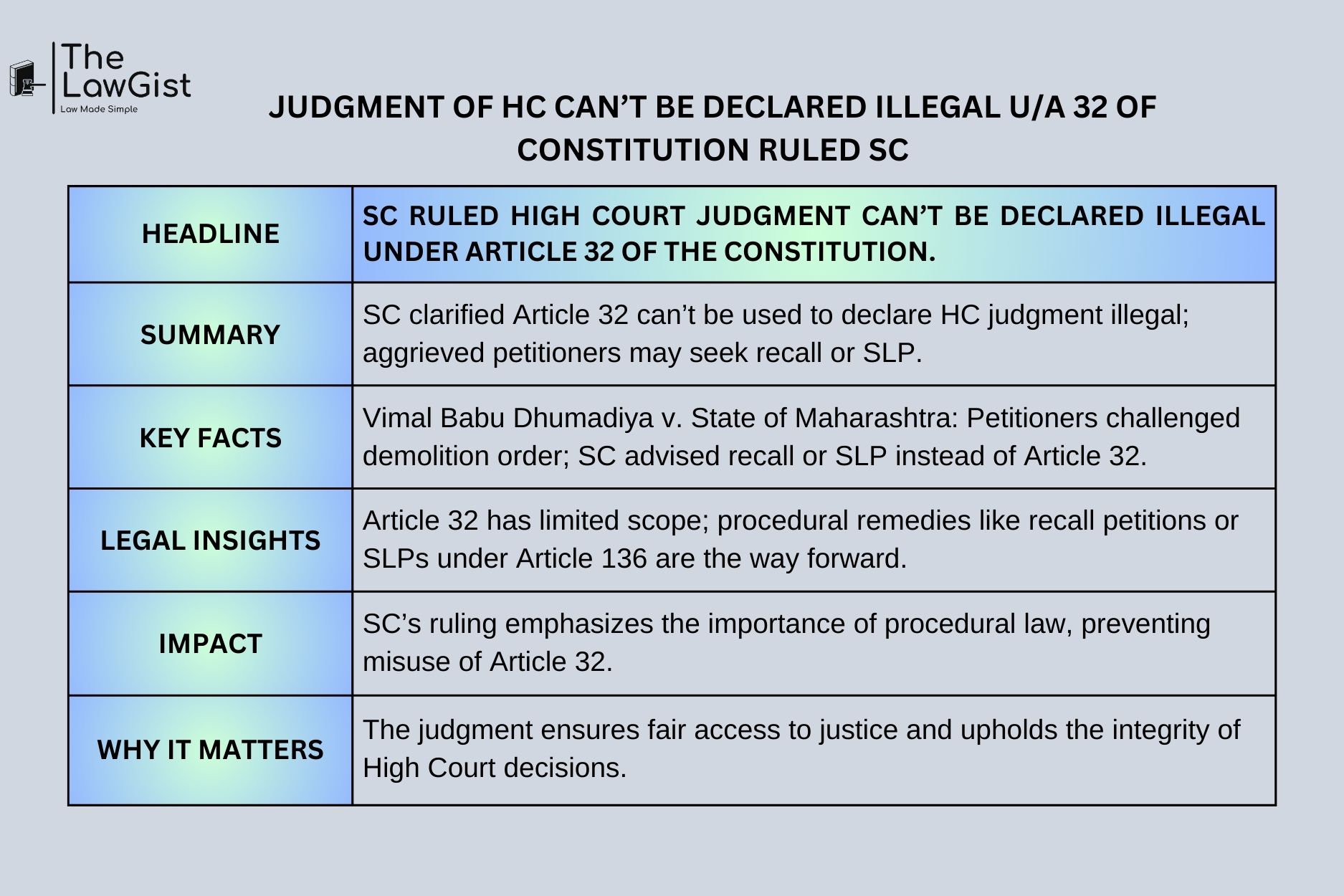
The Supreme Court of India ruled that judgment of the High Court cannot be declared illegal U/A 32 of Indian Constitution.
Summary
The Supreme Court of India stated that a judgment of the High Court cannot be declared illegal and unlawful under Article 32 of the Indian Constitution. Aggrieved petitioners can either seek recall of the judgment or challenge it through a special leave petition (SLP) under Article 136 of Indian Constitution.
Key Facts
- Case Name: Vimal Babu Dhumadiya v. State of Maharashtra,
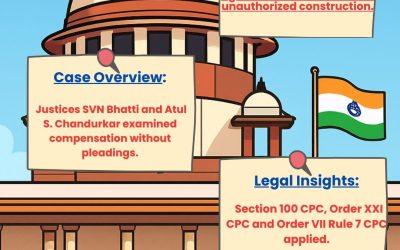
- Judge Name: Justice Vikram Nath, Justice Sanjay Karol, and Justice Sandeep Mehta.
- Petitioners challenged a judgment of Bombay High Court ordering the demolition of apartments due to lack of valid and legal permits.
- Article 32 of the Indian Constitution cannot be used to declare the judgment of the High Court illegal. Petitioners were said to seek recall or challenge the decision through Special Leave Petition (SLP).
- Appearances: Represented by Mr. Mathews J. Nedumpara and team.
Legal Insights
The Supreme Court of India shed light on the limited scope of Article 32 of Indian Constitution and stressed on procedural remedies for aggrieved parties,like recall petitions or SLPs under Article 136 of constitution.
Impact
This judgment shows the significance of sticking to procedural law and stops misuse of Article 32 to avoid established remedies.
Why It Matters
The decision focuses on the procedural structure , making sure of fair access to justice while maintaining the sanctity of High Court judgments.
Source: