The Immigration and Foreigners Bill, 2025: A step towards modernizing India’s immigration laws.
Introduction
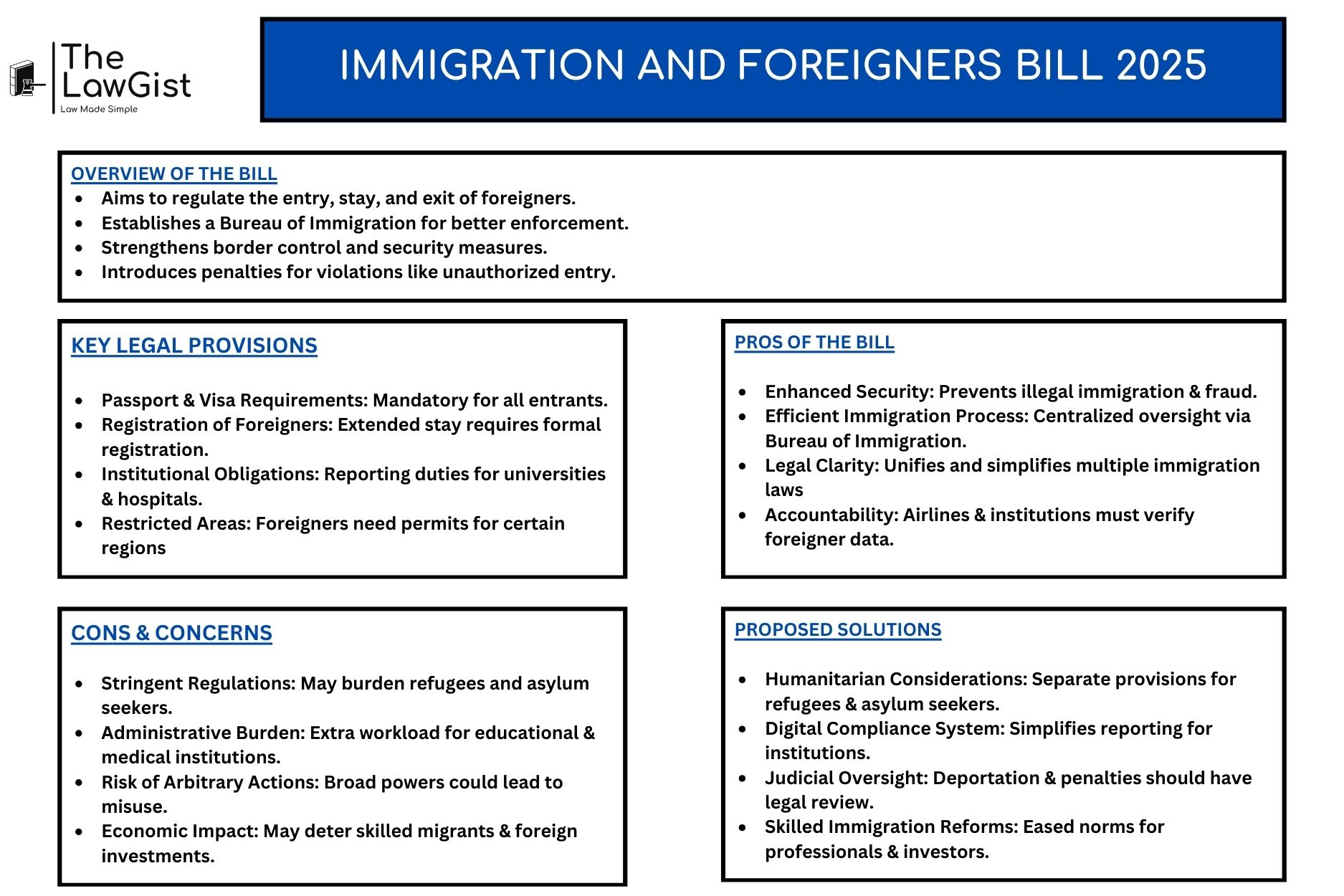
The Immigration and Foreigners Bill 2025 seeks to modernize India’s current immigration laws by establishing a systematic framework for controlling foreigners’ admission, detention, and departure. It combines a number of clauses pertaining to visas, travel documents, and the responsibilities of foreign nationals, Indian institutions, and carriers. The measure aims to improve national security while permitting lawful immigration and travel as cross-border movement rises as a result of globalization. But it also brings up issues with strict rules, possible hardships for migrants, and difficulties in putting them into practice.
Legal Provisions of the Bill
The Immigration and Foreigners Bill, 2025 is divided into six chapters, each addressing different aspects of immigration and foreigner regulation. Below is a detailed breakdown:
1. Preliminary Provisions
- Short Title and Commencement: The Act will come into force on a date specified by the Central Government.
- Definitions: Key terms such as ‘foreigner,’ ‘immigration post,’ ‘passport,’ ‘visa,’ and ‘protected area’ are clearly defined.
2. Matters Related to Immigration
- Requirement of Passport and Visa: Every person entering or exiting India must possess valid travel documents.
- Establishment of Immigration Posts: Specific points of entry and exit will be designated.
- Bureau of Immigration: A specialized agency will be created to oversee immigration functions.
3. Matters Related to Foreigners
- Registration of Foreigners: Foreign nationals staying beyond a prescribed period must register with authorities.
- Obligations of Educational Institutions and Hospitals: Institutions hosting foreign students or patients must report their details.
- Restricted and Protected Areas: Certain areas will require special permits for foreigners.
- Movement and Surveillance: Authorities can restrict the movement of specific foreigners under certain circumstances.
4. Liability of Carriers
- Responsibility of Airlines and Transporters: Transport operators must ensure passengers have valid documents.
5. Offences, Penalties, and Appeals
- Unauthorized Entry: Entering India without valid documents will be penalized.
- Use of Fraudulent Documents: Strict penalties are imposed for forged passports and visas.
- Arrest and Deportation: Authorities have the power to detain and deport violators.
6. Miscellaneous Provisions
- Delegation of Authority: The government can delegate powers to various agencies.
- Application of Other Laws: Existing laws will continue to apply unless explicitly overridden.
- Power to Remove Difficulties: The government has the authority to issue clarifications and amendments for smooth implementation.
Pros and Cons of the Bill
Pros
- Enhanced National Security: The bill strengthens border control and prevents illegal immigration.
- Streamlined Immigration Process: Establishment of a Bureau of Immigration ensures better coordination and efficiency.
- Increased Accountability: Institutions and carriers are required to report foreigner-related information, reducing fraudulent activities.
- Stronger Legal Framework: Consolidation of existing laws into a single legislation eliminates ambiguities and overlaps.
- Flexible Implementation: The bill allows the government to exempt certain cases, ensuring fairness.
Cons
- Stringent Documentation Requirements: The mandatory passport and visa rules may create difficulties for refugees and asylum seekers.
- Burden on Educational and Medical Institutions: Additional reporting obligations could strain resources and administrative capacities.
- Risk of Misuse: Broad powers granted to authorities could lead to arbitrary detentions and deportations.
- Economic Impact: Stricter visa regulations may discourage skilled professionals and investors from entering India.
- Ambiguity in Appeal Mechanism: The penalties and appeal process require more clarity to ensure fairness.
Suggested Solutions for a Balanced Approach
- Incorporating Refugee Protection Measures: Provisions should be included to accommodate humanitarian concerns and international obligations.
- Streamlining Institutional Reporting: A centralized digital system should be established to ease compliance for educational and medical institutions.
- Judicial Oversight on Deportations: Any decision regarding the detention or deportation of a foreigner should be subject to judicial review.
- Special Consideration for Skilled Migrants: Relaxation of visa norms for skilled professionals can promote economic growth.
- Clear Appeal Mechanism: The government should define a transparent procedure for foreigners to appeal against penalties and deportation.
Conclusion
A significant legislative step in updating India’s immigration regulations is the Immigration and Foreigners Bill 2025. Although it seeks to improve efficiency and security, worries about its stringent rules need to be addressed by well-balanced regulations. The measure can accomplish its goals without sacrificing economic interests and humanitarian ideals by implementing protections and expediting procedures. As the discussion goes on, maintaining a reasonable and equitable immigration system continues to be crucial for India’s future.
SOURCE – PRS India
ALSO READ – ILLEGAL IMMIGRATION