
Bharatiya Nyaya Sanhita (IPC)
The Bharatiya Nyaya Sanhita, replacing the Indian Penal Code (IPC), stands as India’s new comprehensive legal framework governing criminal offenses and penalties. Originally drafted in 1860, the IPC served as India’s primary criminal code under British rule. The Bharatiya Nyaya Sanhita aims to modernize and streamline the legal system, ensuring justice and equity for all citizens. Assented to on December 25, 2023, by the legislative body, this new legal code reflects contemporary societal values and legal requirements. With its 23 chapters and 511 sections, the Bharatiya Nyaya Sanhita defines various criminal acts and prescribes corresponding penalties, addressing offenses against the state, public order, property, and individuals’ well-being. It came into force on July 1, 2024, marking the beginning of its enforcement and the continuation of India’s commitment to evolving jurisprudence and legal justice.
Recent Posts
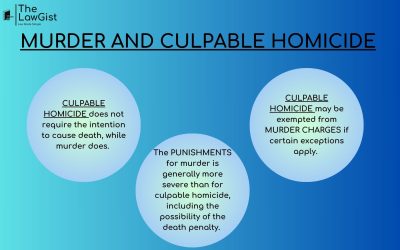
CULPABLE HOMICIDE AND MURDER (SECTION 299-300)
The Indian Penal Code (IPC) outlines various offences related to causing harm to others, including two significant categories of crimes - Culpable Homicide & Murder While both involve the act of causing death, there are distinct differences between the two -...
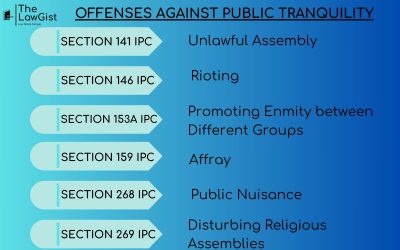
OFFENSES AGAINST PUBLIC TRANQUILITY
Maintaining public tranquillity is crucial for the smooth functioning of any society. To ensure this, the Indian Penal Code (IPC) has provisions to deal with offences that disrupt public peace, harmony, and order. Unlawful Assembly (Section 141 IPC) : An unlawful...
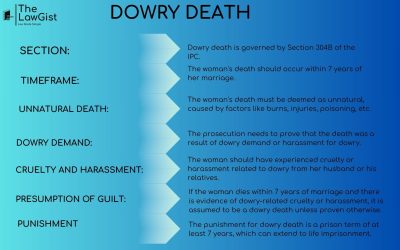
DOWRY DEATH (SECTION 304B)
Dowry Deaths, tragically prevalent in India, are a significant social issue. Under the Indian Penal Code (IPC), stringent provisions have been established to address this grave problem and bring justice to the victims. Dowry deaths result from a variety of complex...
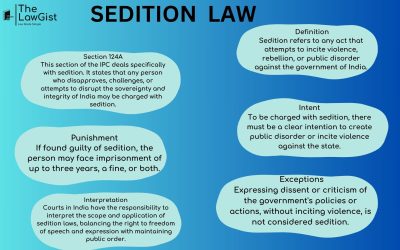
SEDITION (SECTION 124A)
In a democratic society like India, the Sedition law has been a subject of debate for its potential impact on freedom of speech and expression. HISTORICAL BACKGROUND : The sedition law was first introduced in India during the colonial era in 1870 by the British...
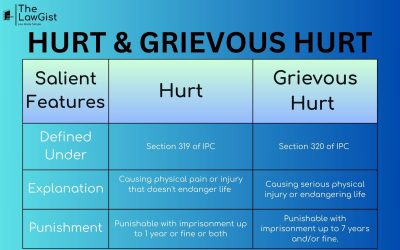
HURT AND GRIEVOUS HURT (SECTION 319-320)
Hurt and Grievous Hurt as defined under the Indian Penal Code (IPC) plays a crucial role in determining the seriousness of physical harm caused to a person. HURT : Under Section 319 of the IPC, Hurt refers to minor injuries that do not have long-lasting effects or...
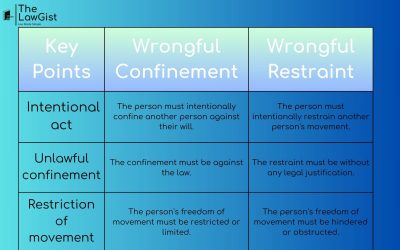
WRONGFUL RESTRAINT & WRONGFUL CONFINEMENT (SECTION 339-340)
Wrongful Confinement and Wrongful Restraint under the Indian Penal Code deals with the unlawful restriction or deprivation of a person's freedom and are crucial in understanding our legal system.Wrongful Confinement, as per Section 340 of the Indian Penal Code, occurs...