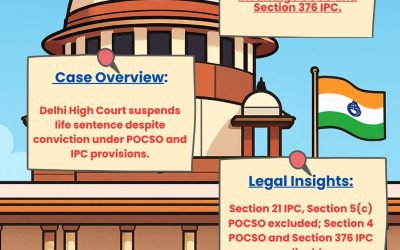
Supreme Court clarifies that materials handed over during arrest cannot qualify as Section 27 discoveries.
Case in NewsSection 27 Discovery Limits Clarified By Supreme Court rejects treating handed-over materials as discoveries. |
Discover powerful Latin Maxims and simplify complex legal terms in seconds.
Case Overview
Case Name: Shaik Shabuddin v. State of Telangana
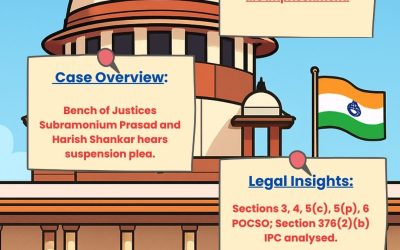
In Shaik Shabuddin v. State of Telangana, the Supreme Court comprising Justice Ahsanuddin Amaah and Justice K Vinod Chandran examined the legality of treating materials handed over during a police check as discoveries under section 27 of the Evidence Act . The appeal arose from convictions under Sections 302, 376D read with Section 34 IPC, Section 3(2)(v) of the SC/ST Act and Section 404 IPC, where the High Court relied on alleged Section 27 recoveries while commuting the death sentence to life imprisonment without remission .
Step into the world of justice with Courtroom Chronicles
Key Aspects
The case required scrutiny of how recoveries were effected and whether they met the statutory threshold of discovery under the Evidence Act . The Court focused on investigative practices and evidentiary standards .
- The deceased went missing after being dropped near a village; her body was later recovered .
- Prosecution alleged gang rape and murder by three accused .
- Trial court imposed death penalty; High Court commuted to life without remission .
- Articles were taken from accused during routine personal checks at arrest .
- High Court treated such seizures as discoveries under Section 27 .
Legal Insights
The Court reiterated settled principles governing Disclosure Statements and discovery evidence, emphasizing strict compliance with statutory requirements .
- Section 27 of the Evidence Act applies only when discovery follows prior concealment by the accused .
- Recovery must be a direct consequence of information supplied in custody .
- Articles already in the accused’s possession at arrest lack the element of concealment .
- Artificially converting routine seizures into discoveries defeats evidentiary safeguards .
Court’s Verdict
While upholding the conviction, the Supreme Court held that materials handed over during a police check cannot be treated as Section 27 discoveries . Finding the High Court’s reliance legally flawed, the Court modified the sentence to 25 years’ imprisonment without remission cautioning against misuse of section 27 of the Evidence Act to legitimise inadmissible confessions .
Source – Supreme Court of India
Read also – Evidence Act
The LawGist ensures exam success with quality notes—TPL, Current Affairs, Recent Judgments, and more. Backed by trusted resources and videos, The LawGist is every aspirant’s first choice.