
Bharatiya Sakshya Adhiniyam (Evidence Law)
The Indian Evidence Law has been superseded by the Bharatiya Sakshya Adhiniyam, marking a significant evolution in the regulation of evidence presentation in Indian courts. Enacted on December 25, 2023, the Bharatiya Sakshya Adhiniyam meticulously governs the admissibility, examination, and cross-examination of evidence, ensuring fairness and impartiality in legal proceedings. This replacement aims to uphold the integrity of the justice system by admitting only relevant and reliable evidence for consideration during trials. Like its predecessor, the Indian Evidence Act of 1872, the new law divides evidence into various types and establishes rules for its presentation. With its comprehensive provisions, including those concerning relevancy, presumption, burden of proof, and admissibility, the Bharatiya Sakshya Adhiniyam stands as a cornerstone of fair and equitable adjudication. Enforced from July 1, 2024, it reflects India’s commitment to modernizing legal frameworks to meet the evolving needs of its justice system while ensuring the protection of citizens’ rights.
Recent Posts
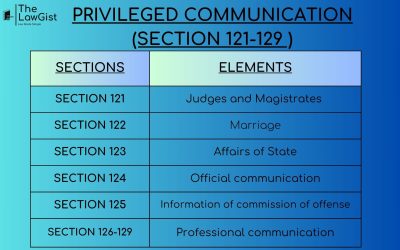
PRIVILEGED COMMUNICATION (SECTION 121-129 )
PRIVILEGE DEFINED Privilege in the legal context refers to the exemption from being compelled to answer certain questions or provide specific information, even if one is a competent witness. Sections 121-129 establish the framework for Privileged Communications under...
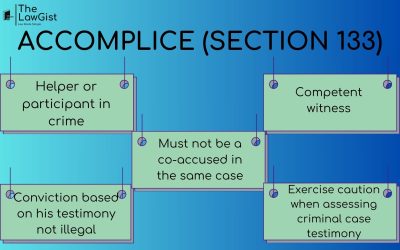
ACCOMPLICE (SECTION 133)
DEFINITION AND COMPETENCY OF ACCOMPLICE WITNESSES An Accomplice, is an individual who is involved in a criminal act, directly or indirectly, and can be linked to the offense either through their actions or by admitting their conscious participation in the crime. ...
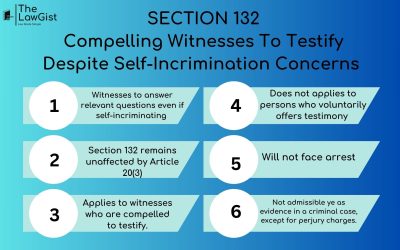
COMPELLING WITNESSES TO TESTIFY DESPITE SELF-INCRIMINATION CONCERNS (SECTION 132)
ENGLISH LAW vs. INDIAN LAW In English law, witnesses cannot be forced to answer questions that might incriminate them. However, Section 132 of the Indian Evidence Act takes a different approach, obligating witnesses to answer relevant questions, even if...

BURDEN OF PROOF (SECTION 101-114A )
The Indian Evidence Act comprehensively addresses the concept of the Burden Of Proof, which is the responsibility to establish a claim in legal proceedings. This responsibility generally rests upon the party asserting a fact rather than the one denying it, as based on...

EXCLUSION OF ORAL EVIDENCE BY DOCUMENTARY EVIDENCE (SECTION 91-SECTION 92)
Section 91: Requirement for Written Documentation- Section 91 of the Indian Evidence Act sheds light on the crucial role of written documentation in legal matters, particularly concerning contracts, property grants, and the legal necessity for written documents. It...

PATENT AND LATENT AMBIGUITY (SECTION 93- 98)
Section 93 to Section 98 of the Indian Evidence Act provides guidelines for interpreting documents when their language is unclear or when doubts arise due to their application to specific facts. These sections allow for the use of extrinsic evidence to clarify the...