
Bharatiya Nyaya Sanhita (IPC)
The Bharatiya Nyaya Sanhita, replacing the Indian Penal Code (IPC), stands as India’s new comprehensive legal framework governing criminal offenses and penalties. Originally drafted in 1860, the IPC served as India’s primary criminal code under British rule. The Bharatiya Nyaya Sanhita aims to modernize and streamline the legal system, ensuring justice and equity for all citizens. Assented to on December 25, 2023, by the legislative body, this new legal code reflects contemporary societal values and legal requirements. With its 23 chapters and 511 sections, the Bharatiya Nyaya Sanhita defines various criminal acts and prescribes corresponding penalties, addressing offenses against the state, public order, property, and individuals’ well-being. It came into force on July 1, 2024, marking the beginning of its enforcement and the continuation of India’s commitment to evolving jurisprudence and legal justice.
Recent Posts

MISTAKE OF FACT AND LAW (SECTION 76)
Under the Indian Penal Code (IPC) , the concepts of "Mistake of Fact" and "Mistake of Law" play a crucial role in determining criminal liability under Section 76. While a genuine mistake of fact may sometimes exempt an individual from criminal liability, a mistake of...

RIGHT TO PRIVATE DEFENCE
The concept of the Right to Private Defence holds immense significance within the framework of the Indian Penal Code. Section 96 to 106 of the Indian Penal Code outline the provisions related to the Right to Private Defence. It grants individuals the right to protect...
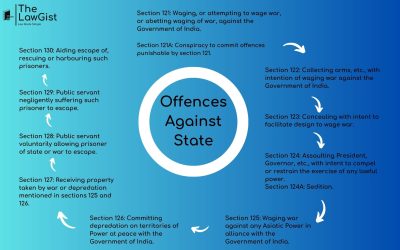
OFFENCES AGAINST STATE
In a democratic society, the preservation of the state's integrity and security is paramount. To ensure this, the Indian Penal Code (IPC) contains provisions that address offenses against the State. These offenses aim to protect the sovereignty, harmony, and stability...

CRIMINAL CONSPIRACY
Criminal conspiracy is a grave offense that poses a serious threat to society. In India, the Indian Penal Code (IPC) addresses the crime of conspiracy and provides legal provisions to deal with such cases.Criminal conspiracy is defined under Section 120-A of the IPC,...

ABETMENT
Abetment is a criminal law concept mentioned between Section 107 to 120 of the Indian Penal Code (IPC). Abetment, as defined in the Indian Penal Code (IPC) is when a person instigates or assists another person to commit a crime. Abetment is the act of aiding,...

COMMON INTENTION
Section 34 of the Indian Penal Code (IPC) states that when two or more persons in furtherance of common intention of all do an act then each of such persons shall be held liable for...